

Dubai's skyline and industrial zones are built on the backs of workers who take on genuine physical
risk every day. From scaffolders balancing dozens of floors up to technicians descending into
confined tanks, these roles carry a level of danger that no amount of experience alone can fully
offset. That's why the emirate has built a strict framework of mandatory certifications around them
and why DCAS approval, in particular, has become a name every HSE manager and site supervisor needs
to know.
If you manage a workforce in construction, oil and gas, facilities management, or industrial
maintenance, understanding which jobs require this approved training isn't optional. It's the
difference between a compliant, insurable site and one exposed to fines, work stoppages, and far
more importantly preventable injuries.
DCAS approval covers the specialised courses in our industrial safety training programme.
DCAS stands for the Dubai Corporation for Ambulance Services, the government body responsible for
setting and enforcing standards for emergency medical response training across the emirate. A "DCAS
approved" course means the training provider, curriculum, and instructors have been vetted and
authorized to issue certifications that Dubai authorities and employers recognize as valid.
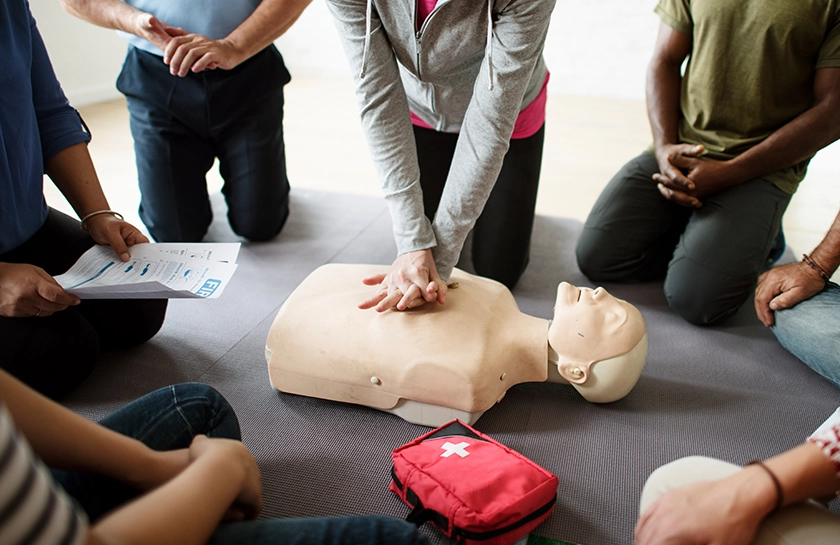
Most DCAS approval centers on emergency and life-support training first aid, CPR, AED use, and Basic
Life Support (BLS) often delivered alongside accreditation from international bodies like Highfield
(HABC), the American Heart Association (AHA), or ASHI. But on real industrial sites, DCAS
certification rarely stands alone. It works in tandem with other emirate-level approvals Dubai Civil
Defence (DCD) for fire safety, Trakhees for free-zone and port developments, and Dubai Municipality
(DM) technical guidelines for site-specific hazards like scaffolding and excavation.
Anyone erecting, dismantling, or inspecting scaffolding must hold verified working-at-height and
rigging certifications before they're allowed on site. A fall from height remains one of the leading
causes of workplace fatality in the UAE construction sector, which is exactly why this category sees
the tightest enforcement.
Workers entering tanks, pipelines, shafts, or any enclosed space with poor ventilation need documented
confined space training, covering atmospheric testing, rescue procedures, and permit-to-work protocols.
Depending on the risk classification of the space, this can range from low-risk entry training up to
full breathing-apparatus certification for high-risk environments.
Beyond scaffolders, this includes façade cleaners, crane operators, riggers, and anyone performing tasks
where a fall could cause injury. UAE regulations require certified training in fall protection, harness
use, and emergency rescue for this entire category.
Welding, cutting, and live electrical work each carry their own permit-to-work requirements and
specialized safety courses, given the fire and shock hazards involved.
These roles typically need broader qualifications NEBOSH IGC or IOSH certification alongside
DCAS-recognized first aid and BLS training since they're responsible for monitoring lifting operations,
excavation, hot work, and confined space activity across an entire site.
Roles here often demand additional layers: H2S awareness, specialized breathing apparatus training, and
derrickman-level work-at-height certification, on top of standard confined space and first aid requirements.
Manpower supply companies and main contractors in Dubai are expected to verify certifications before a
worker ever sets foot on site; it's built into the visa and deployment process for high-risk trades.
Authorities can audit these records at any time, and gaps in documentation tend to surface at the worst
possible moment: during an incident investigation or a client inspection.
Beyond compliance, the real value of proper training is straightforward — it keeps people alive. Falls,
confined space incidents, and fire-related injuries are largely preventable when workers actually understand
the hazards and have practiced the response.
Not every training center that claims "DCAS approved" status is equally rigorous. Before enrolling a
workforce, it's worth checking a few things:
- Confirm the provider's approval directly through DCAS (ambulance.gov.ae) rather than taking marketing
claims at face value.
- Check whether the same provider also holds Trakhees, DCD, or DM recognition if your workforce operates
across different jurisdictions or free zones.
- Look for international affiliation (AHA, ASHI, Highfield/HABC) alongside the local approval, since this
adds global portability to the certification.
- Ask about certificate validity periods most first aid and BLS certifications expire after two to three years
and require refresher training.
Building a safety-trained workforce in Dubai isn't a one-time project. It's an ongoing responsibility that
touches recruitment, deployment, and day-to-day site management but it's also the single most effective investment
a company can make in protecting the people who do the city's most dangerous jobs.



Design :