
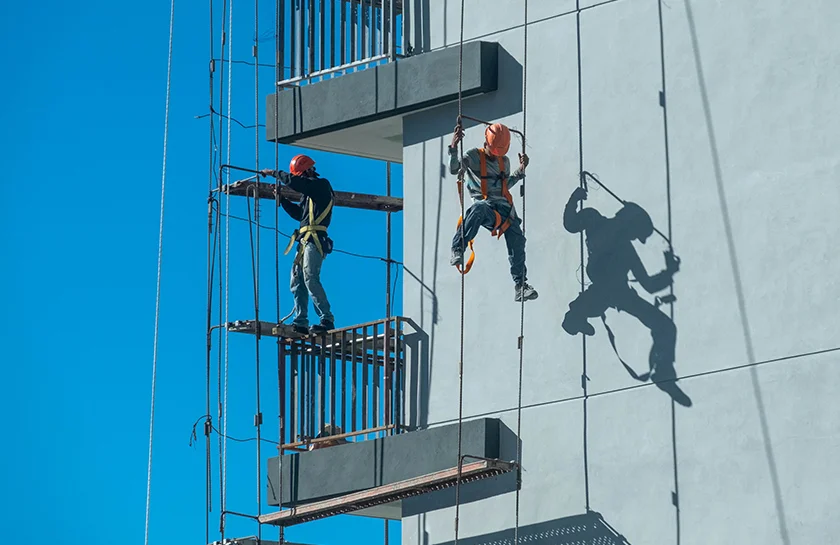
Work at height operations are among the most high-risk activities in industrial, construction,
and maintenance sectors. In Dubai’s fast-growing infrastructure and industrial environment,
ensuring that workers are properly trained to operate Mobile Elevating Work Platforms (MEWPs)
is essential for safety, compliance, and operational efficiency.
Employers often face an important decision when selecting training programs for operators:
should they choose internationally recognized IPAF certification or rely on local work at
height training programs? Understanding the difference between global standards and local
compliance requirements can help businesses make informed decisions that strengthen workplace
safety and operational credibility.
IPAF (International Powered Access Federation) is a globally recognized organization that
promotes the safe and effective use of powered access equipment, including MEWPs such as scissor
lifts, boom lifts, and vertical platforms.
IPAF training focuses on:
- Safe operation of MEWPs
- Hazard identification and risk reduction
- Emergency procedures
- Equipment inspection and pre-use checks
- International best safety practices
Operators who complete IPAF training receive the PAL Card (Powered Access Licence), which is
recognized across many countries and industries worldwide.
For companies involved in international projects or multinational operations,
IPAF certification provides
an added level of global credibility and standardized safety training.
Local work at height training programs in Dubai
are designed to align with UAE safety regulations
and site-specific operational requirements. These training programs mainly focus on workplace safety
standards, local authority compliance, fall protection practices, hazard awareness, and safe access
and rescue procedures, helping workers operate safely and responsibly in high-risk environments.
Local certifications are often tailored to regional industries and may be sufficient for companies
operating exclusively within the UAE.
One of the key differences between IPAF and local training lies in international recognition.
IPAF certification follows globally standardized training procedures, making it highly valuable for
companies working with international contractors, oil and gas projects, airports, logistics facilities,
and large-scale infrastructure developments.
Local training, on the other hand, prioritizes compliance with UAE labor safety standards and practical
site-specific awareness. While it may meet regulatory needs within Dubai, it may not always carry the
same international recognition as IPAF certification.
Many Dubai employers choose IPAF-certified operators because international safety standards help
reduce workplace risks and improve operational confidence.
Benefits of IPAF-certified operators include:
- Globally recognized qualification
- Enhanced operator safety awareness
- Reduced accident risks
- Better compliance with international project requirements
- Improved equipment handling practicess
- Increased employer credibility during audits and inspections
For industries using Mobile Elevating Work Platforms regularly, internationally recognized training can
also improve insurance acceptance and client confidence.
Local work at height training can be highly beneficial for smaller regional projects, businesses focused
on basic compliance requirements, and companies that primarily operate within local UAE regulations. It is
also valuable for site-specific safety inductions, helping workers understand workplace hazards, safety
procedures, and operational practices relevant to a particular job site.
In many cases, employers combine both approaches by providing local safety orientation alongside
internationally recognized IPAF certification.
Choosing between IPAF and local work at height training depends on several important factors, including
the nature of the project, industry-specific requirements, client expectations, and the type of equipment
being used. Employers must also consider international operational standards and local regulatory
obligations before selecting the most suitable training program. Evaluating these aspects helps businesses
ensure proper compliance, improve operator competency, and maintain a safer working environment.
For businesses involved in high-risk environments or international operations, IPAF certification often
provides a stronger long-term advantage. For companies focused mainly on local operations, local compliance-based
training may fulfill immediate regulatory needs.
In Dubai’s rapidly evolving industrial and construction sectors, proper MEWP operator training is critical
for maintaining workplace safety and operational efficiency. Both IPAF and local work at height training
programs play important roles, but understanding their differences helps employers choose the most effective
safety solution for their workforce
By investing in the right training programs, businesses can strengthen compliance, improve operator competence,
reduce workplace risks, and build a safer work environment for everyone involved.



Design :